
A 3 watch collection is not automatically a dress watch, a dive watch, and a chronograph. That formula looks tidy in a watch box, but your calendar may not care. If you wear a suit twice a year, dedicating one-third of the collection to formal duty is bad math.
I would build the collection around three kinds of wrist time instead: the watch you wear most days, the watch you wear without worrying, and the watch that makes an ordinary day feel less ordinary.
That approach is much more honest. The goal is not to satisfy the internet's checklist. It is to own three watches that keep earning their place.
Why Does the Traditional 3 Watch Collection Formula Fall Short?

The usual advice is simple: one dress watch, one sports watch, and one everyday watch. European Watch Company uses those three categories in its collections at different price levels, and the structure makes sense as a starting point.
The problem is that categories do not tell us how you live.
One person may work remotely, hike on weekends, and attend one wedding every three years. Another may wear tailoring four days a week and consider walking to brunch an outdoor activity. Giving both people the same three slots is neat, but not especially useful.
Another reason is: Watch categories also overlap. A simple steel sports watch can handle the office, dinner, travel, and a swim. A slim field watch may look fine with a jacket.
To be honest, I am not against categories. I am against letting them do the thinking for us.
What Three Watches Do You Actually Need?
It's time to give my point. I would assign the three slots by behavior:
| Collection slot | Approximate wrist time |
|---|---|
| The daily watch | About 70-80% |
| The no-worry watch | About 15-25% |
| The special watch | About 5-15% |
Those percentages are a reality check.
If the supposed daily watch is too heavy to wear at a desk, it has failed its audition. If the no-worry watch costs so much that every doorframe becomes a personal enemy, it is in the wrong slot. If the special watch never feels special enough to choose, it is just expensive storage.
Each watch needs a clear job. (Even when the job is simply making you smile!)
What Should the 80% Everyday Watch Be?

This is the backbone of the collection. It should be the watch you reach for while half awake, before you have decided whether the day involves a meeting, groceries, dinner, or all three.
For me, comfort comes first. A beautiful watch that annoys me by lunchtime will spend a lot of time admiring the inside of its box.
The everyday watch usually benefits from:
- A case size that genuinely fits your wrist
- A bracelet or strap you can wear for hours
- Enough water resistance for normal life
- A clear dial
- A color that works with most of your wardrobe
- A movement you do not resent setting
- A design that does not feel too formal or too specialized
Notice that I did not say it must be a particular type. It could be a simple automatic watch, a compact field watch, a Datejust-style design, a restrained diver, or a quartz watch that is ready every time you pick it up.
The daily slot is also where customization can be most valuable.
If you already know that you prefer a 39mm case, a dark green dial, no date, and a comfortable steel bracelet, why keep shopping for a factory model that gets three of those four things right? A well-planned custom watch can remove the compromise instead of adding decoration for decoration's sake.
My test is simple: would I pack this watch for a five-day trip without bringing a backup? If yes, it is a real daily candidate.
What Should the No-Worry Watch Handle?

This is the watch for airport security trays, rain, yard work, beach days, crowded bars, long drives, and weekends when the plan changes three times before lunch.
It does not need to be cheap. It needs to feel replaceable enough, durable enough, or emotionally uncomplicated enough that you can use it normally.
Useful features may include:
- Strong water resistance for your actual activities
- A secure crown and strap or bracelet
- Good low-light readability
- A case finish that does not make every scratch dramatic
- Quartz or solar convenience
- A timing bezel, chronograph, GMT, or alarm you genuinely use
- Easy cleaning after sweat, dust, or saltwater
A dive watch often fits this slot. A field watch, tough quartz chronograph, or simple steel automatic may be a better answer.
The key question is emotional, not technical: will you still wear it when the day might be rough on a watch?
If you call something your beater but remove it before carrying a cardboard box, we need to have a little talk.
What Makes the Third Watch Feel Special?
This watch does not have to cover another activity. It can cover another mood.
Maybe it is the watch you wear to dinner, the chronograph that makes you stare at the dial, a small dress watch, a wild color, or the custom build that finally combines the details you could not find together.
It may also be sentimental:
- A graduation or career milestone
- A wedding watch
- A gift from someone important
- A design inspired by a place, car, sport, or period you love
- A watch you assembled or commissioned yourself
This is why I would not judge a compact collection only by specifications. A watch can have less water resistance, worse accuracy, and fewer practical features while still contributing more to the collection.
The special watch should create a different feeling from the daily watch. If both are steel-bracelet automatics with black dials and similar cases, one will probably become the favorite while the other waits politely for a turn.
Custom watches make particular sense here. The third slot is allowed to be personal.
A dial color with a story, a specific hand set, an unusual bezel, or an engraved caseback can do more than another safe factory configuration.
How Do You Avoid Buying the Same Watch Three Times?
Collectors often confuse different references with different experiences.
Three watches can come from three brands and still feel nearly identical. Put them all in 40mm steel cases, add black dials, automatic movements, and steel bracelets, and you have created a very expensive spot-the-difference game.
I use an overlap test before adding a watch:
| Check | Question to ask |
|---|---|
| Wrist-time overlap | When would I choose this instead of what I already own? |
| Visual overlap | Does it look different from across the room, not only under a loupe? |
| Activity overlap | Can it handle a situation the others cannot? |
| Wearing overlap | Does it feel different in size, weight, or attachment? |
| Emotional overlap | Does it create a different mood or memory? |
A new watch should differ in at least two meaningful ways. Consider:
- Dial color or finish
- Case shape and size
- Bracelet, leather, rubber, or fabric
- Quartz, automatic, or manual winding
- Function or complication
- Sporty, minimal, vintage, or expressive design language
- Personal meaning
Changing only the bezel color may be enough for someone who collects that design on purpose. For a compact three-watch collection, I want a bigger difference.
How Should You Divide the Budget?
I would not split it evenly unless the watches happen to work out that way.
The daily watch receives the most wrist time, so spending more there can make sense. The no-worry watch may be intentionally affordable. The special watch may cost more because of craftsmanship, customization, or emotional importance.
Try one of these approaches:
- Daily-first: 60% daily, 15% no-worry, 25% special
- Emotion-first: 35% daily, 15% no-worry, 50% special
- Balanced: 45% daily, 25% no-worry, 30% special
Price does not determine importance. A sentimental quartz watch may be the one you would save first. A costly watch can still be the wrong purchase if you have to invent reasons to wear it.
Final Verdict: What Makes a Good 3 Watch Collection?
A good 3 watch collection is built around your life, not a standard list of watch categories.
Start with the watch that handles most of your week. Add one you can wear when conditions are rough or plans are uncertain. Finish with a watch that brings a different mood, story, design, or level of personal expression.
Different job, different feeling, different visual profile. That is enough structure to create variety without turning the collection into homework.
The collection does not have to look balanced in a photograph. It has to make sense on Monday morning, Saturday afternoon, and the occasional night worth remembering.
Watches for This Article

Custom Datejust Green
- 39mm everyday case
- NH35 automatic movement
- Sapphire crystal and 904L steel bracelet
$269.00
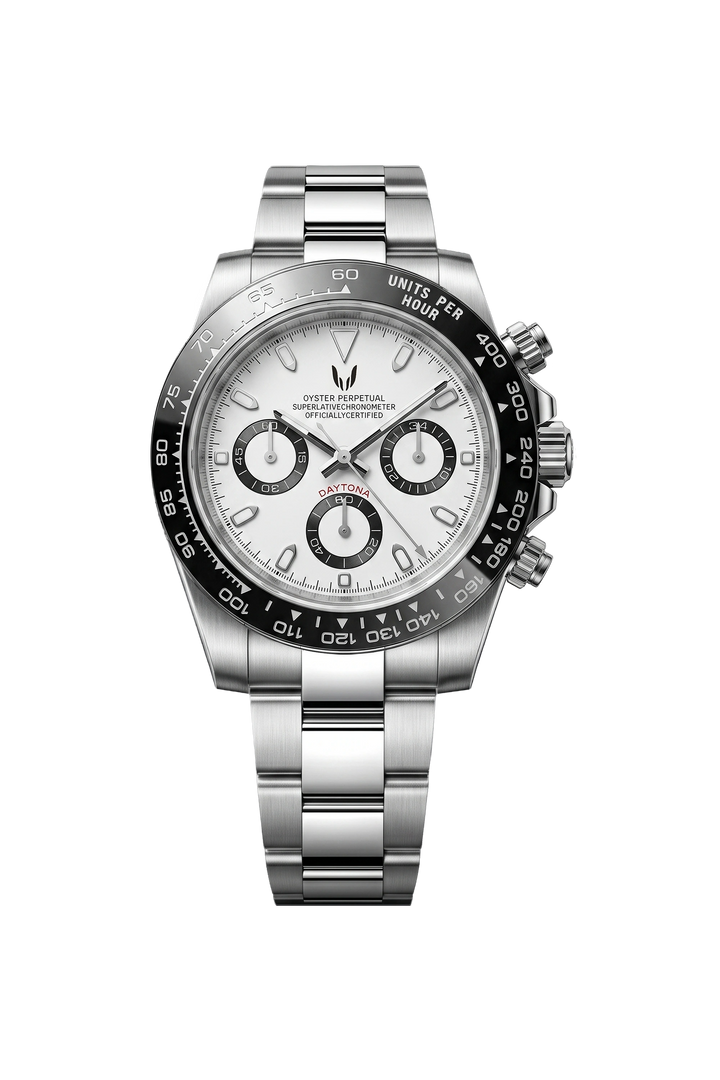
Custom Daytona Panda
- 40mm chronograph-style case
- VK63 mecha-quartz movement
- Sapphire crystal and 904L steel bracelet
$255.00

Custom Your Daytona
- Build-to-spec customization
- Custom dial, caseback, and component colors
- Hand-assembled in New Hampshire and accuracy tested
$295.00
Frequently Asked Questions
Does every 3 watch collection need a dress watch?
No. A dress watch makes sense when you attend formal events regularly or genuinely enjoy the style. Otherwise, a restrained everyday watch may cover occasional formal use.
Does every 3 watch collection need a dive watch?
No. You need a watch that handles your wet, active, or rough-use situations. That could be a dive watch, field watch, sports watch, or durable quartz model.
What should the first watch in a 3 watch collection be?
Start with the watch you can wear most days. Prioritize comfort, fit, readability, wardrobe compatibility, and enough durability for your normal routine.
Should the three watches have different dial colors?
Different colors can reduce visual overlap, but finish, case shape, size, and strap also matter. Three dark dials can still work if the complete wearing experiences are clearly different.
Is a chronograph necessary in a 3 watch collection?
Only if you use or enjoy one. A chronograph adds visual and mechanical variety, but it should not take a slot merely because it appears on standard collector checklists.
How much should I spend on each watch?
There is no need to divide the budget equally. Spending more on the daily watch or the emotionally important watch can make sense, while the no-worry piece may be deliberately affordable.
When should I add a fourth watch?
Add one when it offers a genuinely new experience or fills a real gap. If it mostly duplicates a current watch, waiting may improve both the collection and your bank account.
Do you really need a dress watch in a 3 watch collection?
How often did you wear a suit, tuxedo, or truly formal outfit? If the answer is often, a slim and restrained watch deserves serious consideration.
References
- European Watch Company: Building the Perfect 3 Watch Collection at 3 Price Points
- Time+Tide: Affordable Three-Watch Collections
- Fratello: The Three-Watch Collection and Three Alternatives
- Reddit: What Is the Perfect 3 Watch Collection?
- Watchuseek: A Getting Back to Basics 3 Watch Collection
- Menswear Musings: The Three-Watch Collection Series


